
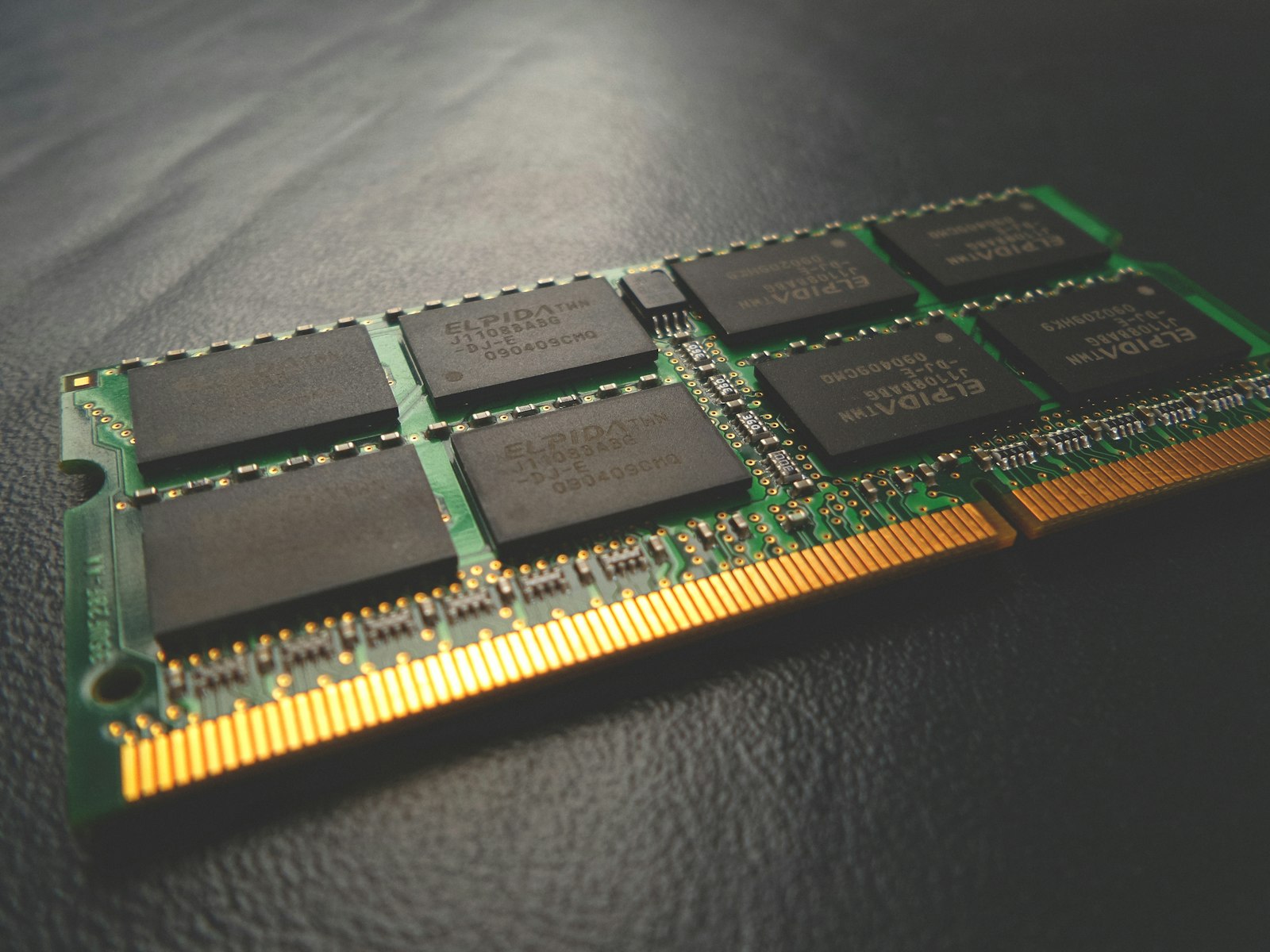
South Korean chipmaker SK hynix has reported the biggest quarter in its history, as demand for memory used in artificial intelligence servers continues to outrun supply and push prices sharply higher across the industry.
For the July–September quarter, the company reported revenue of 104.62 trillion won, the first time its quarterly sales have crossed the 100 trillion won mark and more than four times the figure a year earlier. Operating profit reached 83.33 trillion won, about $62 billion, up roughly 632% year on year and comfortably ahead of the 76.96 trillion won analysts had expected. That works out to an operating margin of around 80%, a level more often associated with software firms than with factories.
Net profit was weaker than forecast at 39.78 trillion won, well below market estimates of about 61 trillion won, though still more than three times last year’s result. Investors focused on the operating numbers: SK hynix shares rose nearly 11% on Wednesday, helping lift South Korea’s Kospi index by more than 6% to above 6,000 points.
Booked through 2029
The headline figure for the industry was not the profit but the order book. SK hynix said its DRAM and high-bandwidth memory (HBM) volumes for the next three years are effectively sold out through 2029. It now has long-term supply agreements with 14 major customers, up from 10, and those contracts already cover more than half of its planned production capacity for 2027 and 2028.
HBM is the stacked memory placed next to AI processors such as Nvidia’s accelerators, and it has become SK hynix’s most important product. The company expects its newest generation, HBM4, to overtake the previous HBM3E in both shipments and revenue in the current quarter.
Prices are doing much of the work. Average DRAM selling prices rose in the high-20% range during the quarter, and NAND flash, used for storage, climbed in the mid-20% range. The company also announced a shareholder return package of about 100 trillion won for 2026, nearly seven times what it paid out last year. Analysts in Seoul expect quarterly operating profit to pass 100 trillion won for the first time in the final three months of the year.
What it means here
Bangladesh does not make memory chips, but it buys a great many devices built around them. Every smartphone, laptop, router and server sold here contains DRAM and flash storage, and when a handful of suppliers commit most of their output to AI data centres, the remaining supply for consumer gadgets becomes more expensive.
That effect has not fully reached shop shelves yet. Korean brokerage Eugene Investment & Securities said price rises for smartphone memory were only partly reflected in the second half of 2026 and should take full effect in early 2027, and it expects DRAM contract prices to rise by about another 17% in the first quarter. Local handset assemblers, which put phones together in Bangladesh but import the chips inside them, will face the same higher component bills as brands shipping finished devices.
For buyers, that suggests the coming weeks may be a reasonable moment to buy a planned phone or laptop upgrade rather than waiting for the new year, particularly for models with large amounts of RAM or storage. For businesses budgeting for servers, storage or cloud capacity in 2027, it is a signal to lock in prices early. The AI boom is being built far from Dhaka, but its costs are already travelling down the supply chain.
