
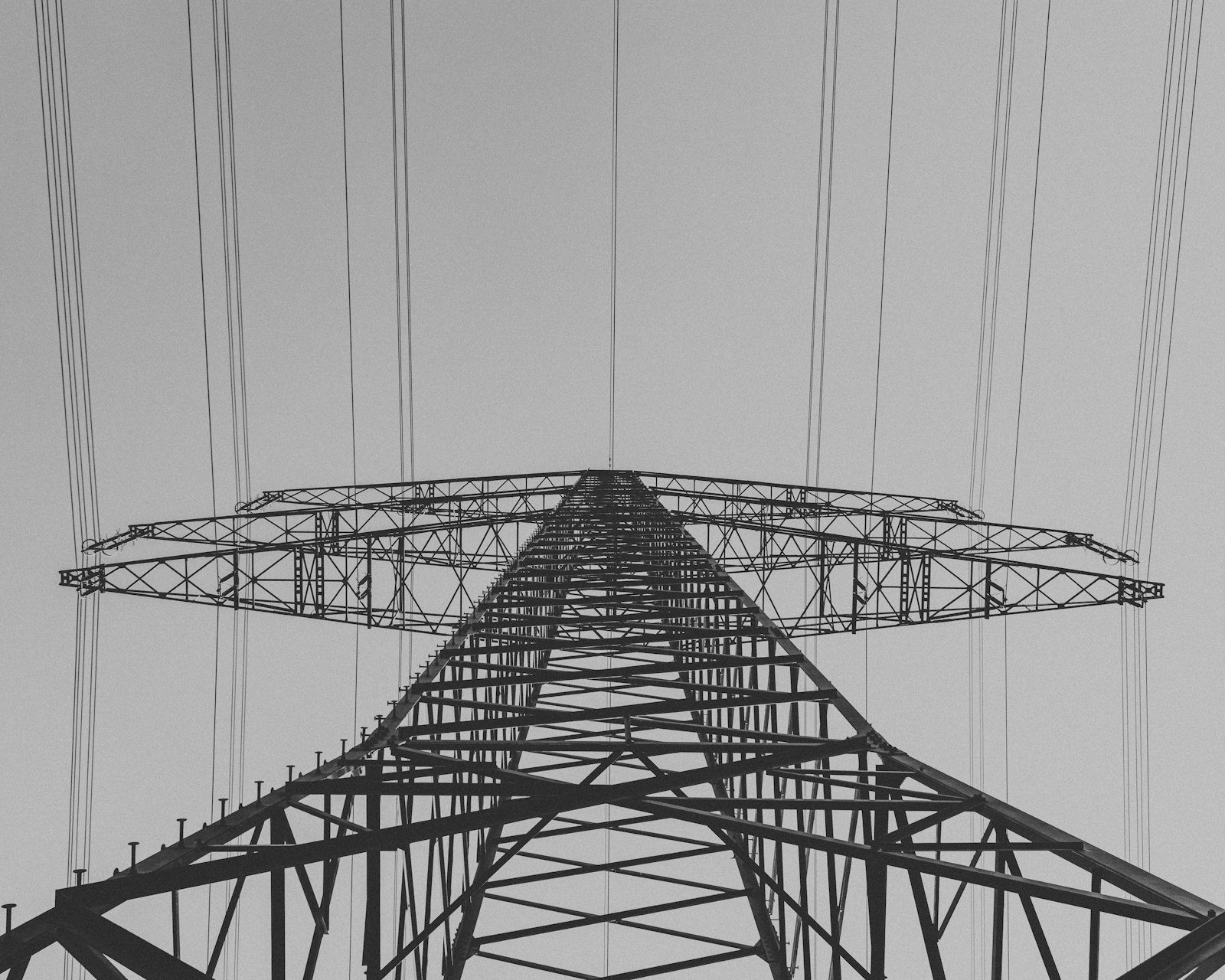
A fault in the national grid on Tuesday afternoon knocked several large power plants offline at once, leaving parts of Dhaka and Chattogram without electricity and reviving old questions about how well the country’s transmission network can contain a single failure.
The disruption began at around 12:43pm on 27 October. Data from Power Grid Bangladesh PLC, the state-owned transmission company, show generation falling from 14,719MW at noon to 9,349MW an hour later, a loss of 5,370MW. Gas-fired output dropped from 4,382MW to 1,734MW, while coal-fired plants went from 4,863MW to 2,947MW.
Areas in eastern Dhaka, including Gulshan, Rampura, Motijheel, Siddhirganj, Bhulta, Haripur and Ullon, lost supply, as did parts of Chattogram. The Bangladesh Secretariat was in the dark for close to an hour. The northern region and much of the rest of the country were not affected.
What went wrong, and who is checking
Officials have pointed to a trip on the Meghnaghat–Haripur transmission line as the likely trigger, but the precise technical cause has not been confirmed. Engineers began bringing plants back one by one roughly two hours after the outage, restoring connections in stages under the National Load Despatch Centre. The Bangladesh Power Development Board said it expected supply to reach a comfortable level by around 10pm, and the grid operator warned that some load-shedding could continue while units returned to full output.
Two separate inquiries are now under way. Power Grid Bangladesh has formed a five-member committee led by Syed Ebadullah Haider Ali, chief engineer (additional charge) of Transmission-2, with five working days to report. The Power Division has set up its own panel, headed by additional secretary K M Ali Reza and including a representative from BUET’s electrical and electronic engineering department, with two weeks to identify the causes and recommend how the grid’s protection systems can be strengthened.
Tuesday’s event is the latest in a short but notable list. In October 2022, a failure in the eastern grid cut power to Dhaka, Chattogram, Sylhet and Mymensingh, with restoration taking between three and eight hours. In November 2014, a nationwide collapse left most of the country without electricity for close to 12 hours.
What it means here
This outage was smaller and shorter than those earlier failures, but it shows how one fault on a key line can still pull thousands of megawatts out of the system within minutes. In a well-protected grid, a problem on a single line should be isolated before it spreads to the generators feeding it. When several plants drop out together, it suggests the protection settings, the spare capacity or the coordination between plants and the dispatch centre need a closer look.
The stakes are rising because so much of daily economic life now runs on electricity that cannot simply wait. Mobile networks, bank data centres, digital payment platforms, hospitals and export factories all depend on backup generators and batteries to ride through outages, and those systems are costly to run for hours at a time. Smaller offices and shops in the affected areas often have no backup at all.
The two committees have a chance to give the public a clear technical account: what tripped, why the failure cascaded, and what will be fixed. Publishing those findings, along with a timeline for any upgrades to protection equipment and grid monitoring, would do more to rebuild confidence than another report that stays on a shelf. For businesses planning around Bangladesh’s power supply, that transparency matters as much as the fix itself.
