

The United States has decided to let Nvidia resume sales of its H200 artificial intelligence accelerators to selected customers in China, in exchange for a 25% levy on all related revenue paid to the US government. The move partially unwinds strict export controls imposed over the last two years, which had blocked China from buying Nvidia’s most capable data-centre chips and forced the company to create slower, compliant variants. Washington is still keeping Nvidia’s newest and most powerful processors off the Chinese market, but the H200 is several times faster than the H20 chips that many Chinese firms had treated as their ceiling. Investors quickly read the decision as a signal that the administration is willing to trade controlled access for cash and visibility into how the hardware is used.
For global markets, the decision reduces one immediate tail risk: that Nvidia would permanently lose high-margin Chinese demand and see a deeper break in semiconductor supply chains. China remains the world’s second-largest market for advanced AI accelerators, and orders from local cloud giants, internet platforms, and startups have been a key pillar of Nvidia’s revenue growth. Allowing H200 shipments, even under a steep revenue share, stabilises expectations around the company’s sales mix and may calm equity investors who feared a prolonged export freeze. It also helps Chinese firms avoid a scramble for grey-market hardware, which had driven up prices and encouraged parallel import networks across Asia.
Strategic balance in chip controls
Strategically, Washington is trying to hold two lines at once: maintain a clear performance gap between chips available to US-allied firms and those sold into China, while avoiding a complete decoupling that could hit American suppliers and raise costs for AI infrastructure worldwide. By limiting exports to pre-approved Chinese buyers and taking a quarter of the revenue, the US government gains both oversight and cash that can be channelled into domestic industrial policy. Similar terms reportedly apply to rival manufacturers like AMD and Intel, which prevents Nvidia from being uniquely advantaged or punished. The arrangement looks less like a full retreat from export controls and more like a monetised, licence-based regime.
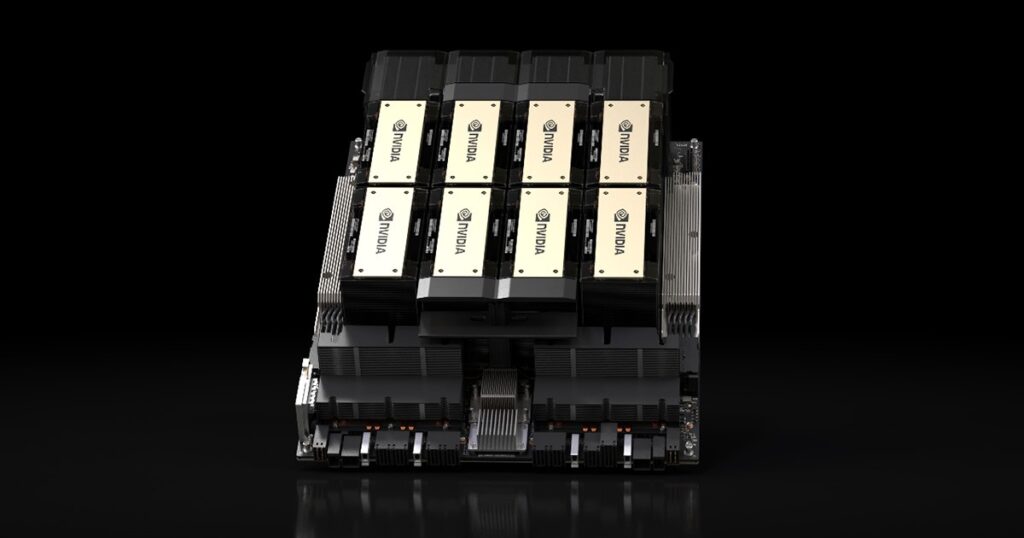
For Beijing, access to H200 chips offers breathing space but not a full solution. The hardware still trails Nvidia’s latest architecture by more than a year, and Chinese firms remain exposed to future policy swings in Washington. That pressure keeps incentives high for China to ramp up its own advanced chip design and to deepen partnerships with non-US suppliers, including efforts to work around US-controlled tooling and software. However, the resumption of H200 flows buys time for Chinese cloud providers to maintain, rather than freeze, their AI rollouts in areas like autonomous driving, recommendation engines, and enterprise services.
For Bangladesh and other emerging markets, this decision shows how export controls are shifting from blanket bans to granular, negotiated access that shapes where AI capacity gets built. Countries that depend on foreign cloud providers may see more of their AI workloads indirectly processed on US-controlled chips, even when the data is hosted in regional data centres. That heightens the importance of understanding which jurisdictions actually control the silicon behind local AI services, from fintech to health tech.
The move also reinforces Nvidia’s central role in the AI hardware stack, which affects pricing and delivery timelines for any Bangladeshi firm trying to scale generative AI or machine learning workloads on global clouds. If US authorities can selectively tax and steer exports into China, they could apply similar leverage over future shipments into other politically sensitive regions. For policymakers in Dhaka, the message is that long-term digital strategy cannot ignore semiconductor geopolitics: incentives for local AI talent, diversified cloud partnerships, and participation in regional data-centre projects all matter more when a few export decisions in Washington can shift global compute capacity almost overnight.
