

MARS1000 milestone launch
Malaysia has unveiled what it describes as its first domestically developed edge AI processor, a step meant to move the country up the value chain from manufacturing into chip design. Local chip design company SkyeChip announced the processor, called MARS1000, at an industry event, positioning it as a locally built alternative for running AI workloads on-device rather than in the cloud.
Edge AI processors are designed for inference close to where data is generated. That typically means embedding compute in cameras, sensors, industrial controllers, and consumer devices so they can run models with lower latency, reduced bandwidth costs, and tighter data control. The trade-off is scale. Edge parts generally cannot match the raw performance of the largest data center GPUs, but they can be economically meaningful when deployed across large fleets of devices.
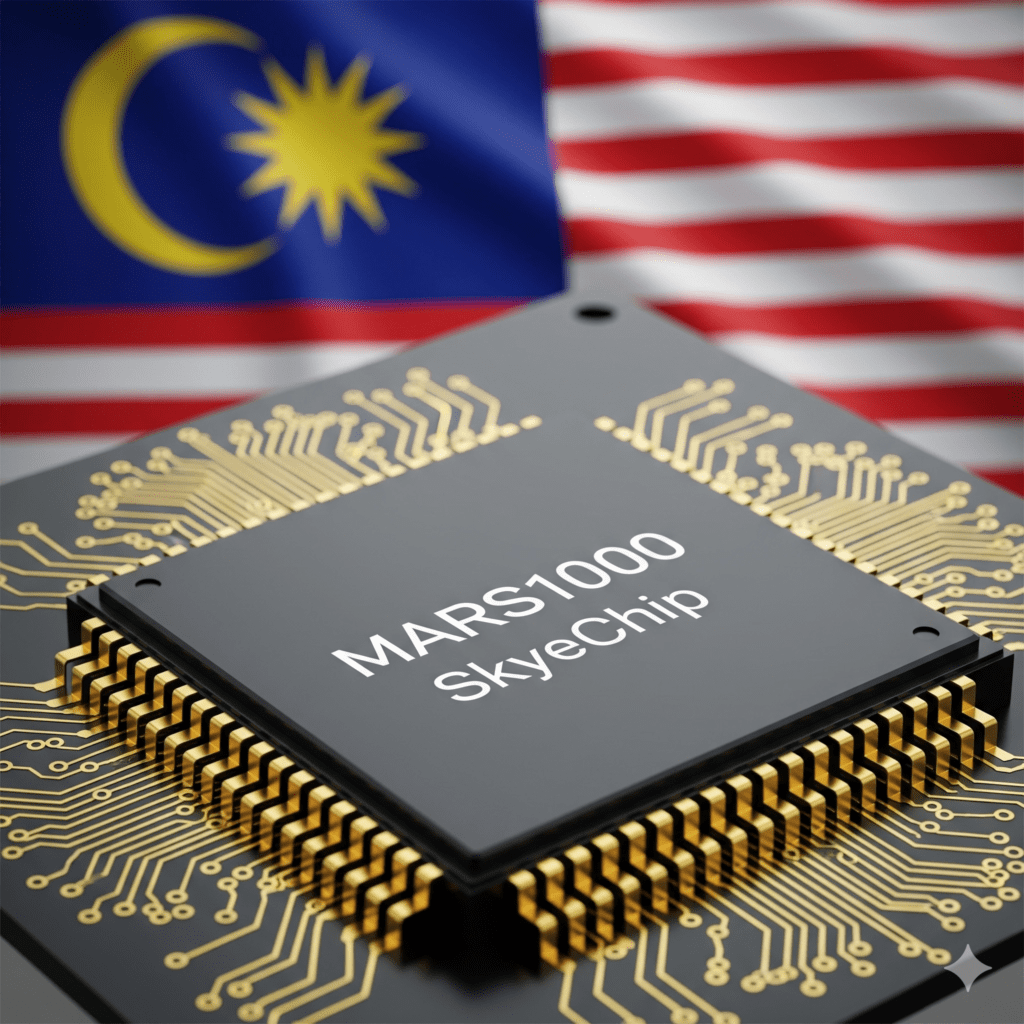
For Malaysia, the strategic value is not only technical. The country has long been a critical link in global semiconductor assembly, testing, and packaging. A domestic processor signals an attempt to capture higher-margin intellectual property and product strategy, even if initial volumes are small. Over time, successful design capability can anchor local tooling, verification talent, and specialized supplier networks.
The announcement also lands in a period when AI compute access is becoming a policy issue. The global market for advanced chips is increasingly shaped by export controls, end-user scrutiny, and constraints on cross-border movement of sensitive hardware. Malaysia has been pulled into that reality both because of its manufacturing footprint and because it is being used as a regional staging point for AI infrastructure.
Against that backdrop, an edge processor offers a different pathway. Edge chips are not the same as frontier training accelerators. They can support commercial AI deployments in manufacturing, logistics, and smart-city systems without relying on the most restricted classes of GPUs. That can make them attractive for countries that want AI adoption but do not want their plans to hinge entirely on the availability of top-tier imported accelerators.
Still, building a chip is only the first step. The market will judge MARS1000 on software support, power efficiency, tooling, and ecosystem integration. Many edge deployments depend on mature compiler stacks, model conversion pipelines, and reference designs that reduce time-to-market. Without those layers, even capable silicon struggles to win design slots.

Malaysia’s broader policy environment suggests the state wants to be more than a production line. A national AI office was set up to push adoption and to develop regulatory and ethics frameworks. That institutional push can help align public-sector pilots, industrial incentives, and training programs with local hardware and software capabilities, if executed coherently.
There is also a supply chain argument. If Malaysian firms can design chips that are manufactured and packaged within regional partner networks, they can reduce exposure to single-country bottlenecks and to international shipment constraints. That does not eliminate dependency on external foundries, but it can diversify options and strengthen negotiating leverage.
The near-term commercial outlook is likely narrow and targeted. Edge AI wins often come from vertical solutions: a specific industrial customer, a government procurement program, or a device maker that values local supply assurances. The chip’s success will depend on whether SkyeChip can secure reference customers, validate performance in real deployments, and iterate rapidly.
Even if early adoption is limited, the debut matters as a signal. It suggests Malaysia is trying to develop a domestic design narrative at the same time that AI governance is tightening around the movement of high-end compute. For a country positioned between global supply chains and regional demand, that combination could shape its role in the next phase of AI industrialization.
