

Major chip manufacturers are increasing equipment spending heading into 2026, signalling a recovery in the semiconductor supply chain after two years of uneven investment cycles. According to reporting on 10 December, TSMC, Samsung and Intel have all expanded procurement for extreme ultraviolet (EUV) and deep ultraviolet (DUV) lithography systems, alongside new deposition and metrology tools for advanced nodes. The renewed spending indicates confidence in demand for 3-nanometre and upcoming 2-nanometre processes, driven by AI accelerators, premium smartphones and energy-efficient data-centre chips.
Industry analysts say the rebound reflects a shift from defensive budgeting to targeted capacity expansion. In 2023–24, chipmakers slowed capital expenditure to manage inventories and navigate global demand uncertainty. Now, with AI hardware requirements climbing and governments offering incentives for domestic production, fabrication giants are preparing for multi-year output growth. The investment is focused less on building new mega-fabs and more on upgrading existing lines with next-generation manufacturing modules.
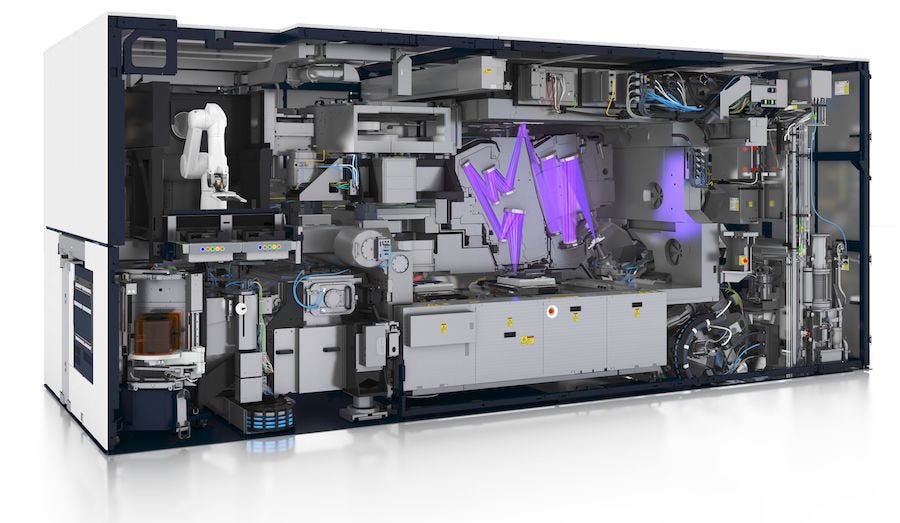
EUV machine availability remains the biggest constraint. ASML, the dominant supplier, continues to face long order queues, with delivery slots stretching well into 2027 for high-end systems. TSMC and Samsung are prioritizing EUV allocation for their most advanced nodes, while Intel is expected to use a mix of EUV and optimized DUV for its interim process technologies. The reactivation of backlogged orders highlights growing confidence that demand for AI and high-performance computing will remain strong through the decade.
Another driver is diversification. Governments in the US, Japan, South Korea and Europe have introduced capital subsidies to localize parts of the semiconductor chain, encouraging manufacturers to commit to long-term equipment purchases. This spreads geopolitical risk and reduces dependence on single-region fabrication ecosystems. The result is a gradual shift toward distributed production, though advanced packaging and certain etching tools remain highly concentrated.
Market and regional implications
For downstream markets, increased equipment investment signals shorter lead times and potentially more predictable pricing for high-end chips from 2026 onward. However, the gains will be uneven. Older-node capacity used in automotive and industrial electronics continues to face structural bottlenecks, since most new spending is directed at cutting-edge nodes rather than mature 28- to 65-nanometre processes. This could sustain price pressure for components widely used in South Asian manufacturing.
AI accelerator demand remains the strongest pull factor. Cloud providers and model developers are seeking more efficient chips with better memory bandwidth and lower power consumption. The transition to advanced nodes is essential to meet those requirements. Upstream investment therefore foreshadows continued growth in AI infrastructure spending and could influence the pace at which new model capabilities reach consumers.
For Bangladesh’s tech and manufacturing ecosystem, the global rebound matters even without direct chip production. Local assemblers, telecom operators and data-centre builders rely on imported semiconductors whose availability and pricing are shaped by upstream investment cycles. A healthier capex environment reduces volatility, improves supply predictability and may lower costs for network equipment and smartphones over the next two years.
Overall, chip equipment spending is stabilizing after a volatile period, with manufacturers signalling renewed confidence in long-term demand. The focus on advanced nodes underscores the centrality of AI workloads in shaping semiconductor investment priorities for 2026 and beyond.
